

Pakistan’s Nuristan : Buzkashi of Sheikhanandeh

Located further into the Kalash Valleys is the village of Sheikhanandeh (often spelled “Sheikhandeh,” though “Sheikhanandeh” is the more common pronunciation). This is a Muslim village within the Kalasha Valleys. While there are many Muslim villages in the region, Sheikhanandeh is special; its people are the descendants of those from Nuristan (formerly known as Kafiristan) in Afghanistan.

↓↓ Buzkashi of Sheikhanandeh

The Conversion of the Nuristani People

Formerly, this region was known as “Kafiristan” (the Land of the Kafirs, or “infidels”), where unique polytheism and animism were practiced. However, between 1895 and 1896, the region was subjected to military invasion and forced conversion by the then Emir of Afghanistan, Abdur Rahman Khan. Following the conquest and conversion, the Emir renamed the land “Nuristan,” meaning the “Land of Light” or the “Enlightened Land.”

The people of Sheikhanandeh are descendants of those who arrived from the Afghan side, escaping the upheaval of the late 1800s and early 1900s, or migrating after their eventual conversion to Islam. Linguistically, they remain separate from their Kalash neighbors, speaking Kati (one of the Nuristani languages) instead of Kalash. As Urdu is not widely spoken in the village, the inhabitants rely on Khowar, the common language of the region, for communication with outsiders.


The village of Sheikhanandeh
Traditional houses of Sheikhanandeh
The goats on the terrace are kept for their milk
Unlike the Kalash, this village is home to a conservative Muslim community. The children watch visiting foreigners from a distance.

Preserving the Tradition of Buzkash

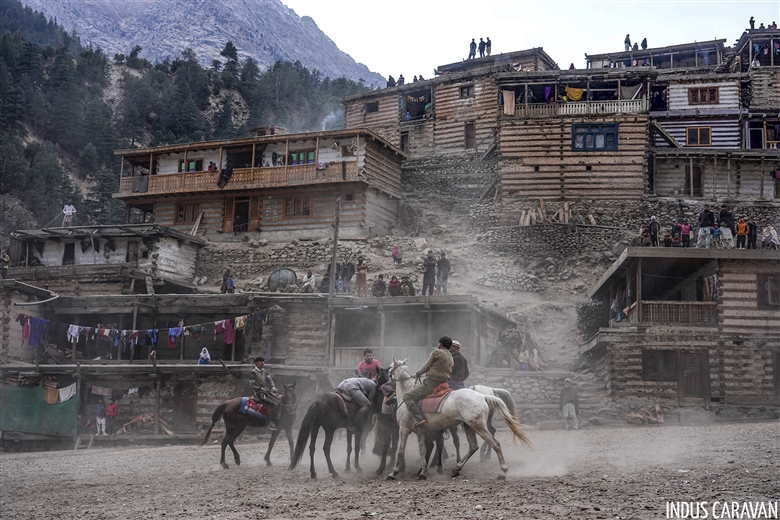
Sheikhanandeh is one of the rare places in Pakistan where Buzkashi—the national sport of Afghanistan—is still practiced today. This rugged equestrian sport was brought over from the Afghan side by their ancestors. It stands as a powerful symbol of their resilience and strength, forged by a life in the harsh mountain terrain.

Originating in the steppes of Central Asia, Buzkashi is a traditional horseback sport of legendary intensity. Famous as Afghanistan’s national sport, it maintains a fervent following across neighboring regions, from northern Pakistan to Kyrgyzstan, Kazakhstan, and Uzbekistan.

The competition kicks off the moment they pull the goat carcass from the river

Instead of a ball, the game is played with a headless and limbless goat carcass. In the Buzkashi of Sheikhanandeh, the competition begins in the river. The prepared carcass is kept cool in the flowing water, and the match officially starts the moment it is hoisted out of the river.

Tugging and pulling the goat while mounted on horses

In Buzkashi, two groups of riders compete to seize the goat carcass. The name literally reflects the action, coming from the Persian words ‘Buz’ for goat and ‘kashi’ for pulling or dragging.

Scrambling for the goat
The match is not limited to the village square; it takes place across any terrain where horses can run, including the riverbanks and the village paths

After the intense match, the meat is never wasted. It is distributed among the riders and villagers to be eaten. It is said that the struggle of the game causes the blood to marinate the meat, making it exceptionally tender and ideal for stews. Furthermore, eating this meat is believed to bring both strength and good fortune.

The riders of Buzkashi are known as ‘Chapanbaz,’ and they are revered as heroes within their community.


Photo & Text : Mariko SAWADA

*Contact us, Indus Caravan for more information or to make arrangements for visiting Kalash valley and Sheikhanandeh.

*Please follow us on YoutubeInstagram & Facebook

Category : = Video Clip KPK > ◆ Video Breathtaking Views of Pakistan > - Kalash Valley > ◆Khyber Pakhtunkhwa > ◇Domestic animal of Pakistan
Tag : , , , , , , , , , , , , , , ,

Autumn in the Upper Hunza, a typical evening in the Morkhon and Ghalapan Villages

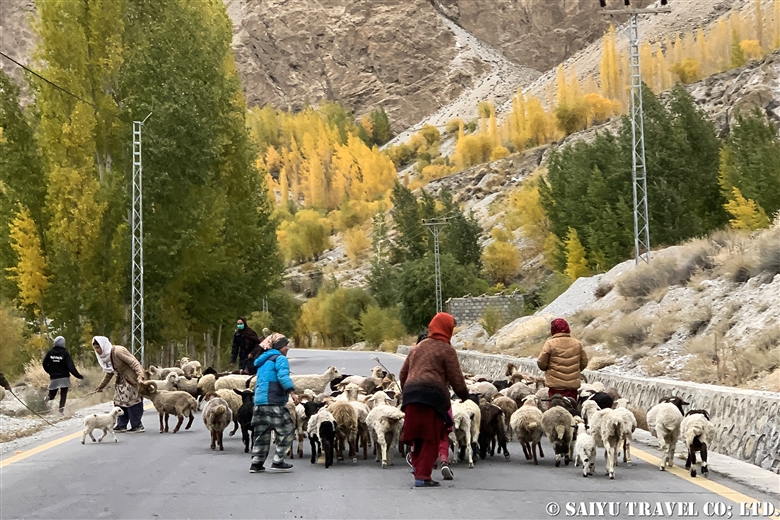
After a long days of summer spent grazing, in mid-October, the cattle are returned to the village. After that, one a daily schedule the goats and sheep from the village are gathered to go to the pastures for grazing. We arrived in the Upper Hunza’s Ghalapan Village to await the arrival of the goats and sheep in the evening.


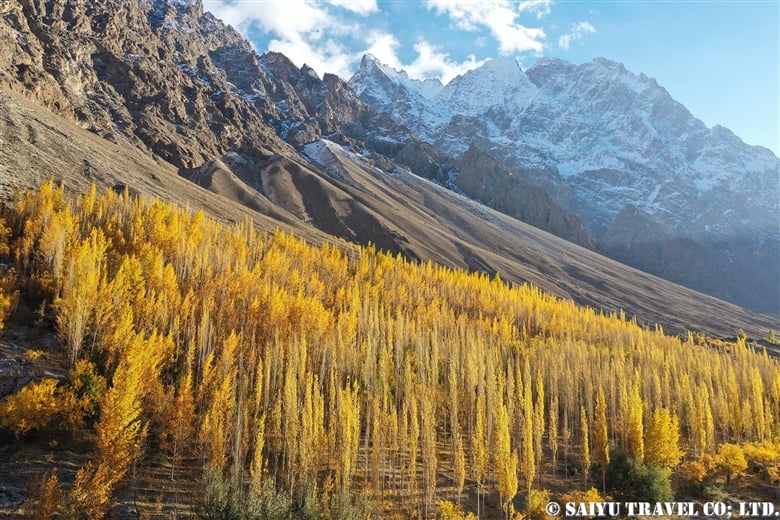
The Upper Hunza during this season is the most beautiful season, with the poplar trees changing colors. The time to catch their bright yellow leaves in the sunlight is limited because the poplar trees grow in the valleys, surrounded by high peaks all around them.


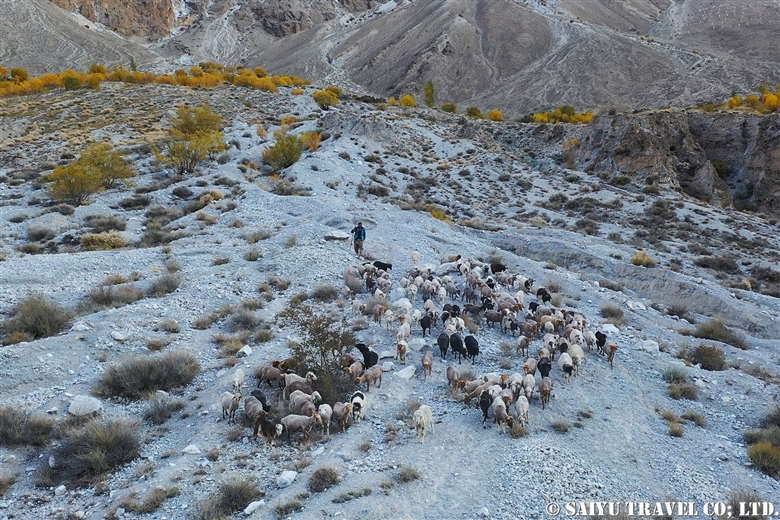
After grazing on the mountain slopes, the goats and sheep have started their decent to the village. Here they come!


↓↓ This is a video of the livestock heading back to the villages of Mokrhon and Ghalapan, after a day of grazing. The poplar trees were amazing as well, so that drone footage is included as well!


Morkhon & Ghalapan in Autumn|秋の上部フンザの村にて


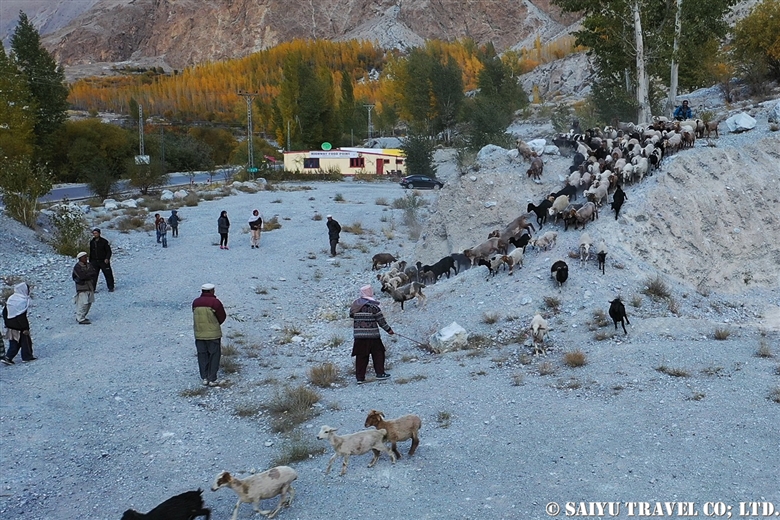
The villagers were waiting for the goats and sheep to come back to the village.


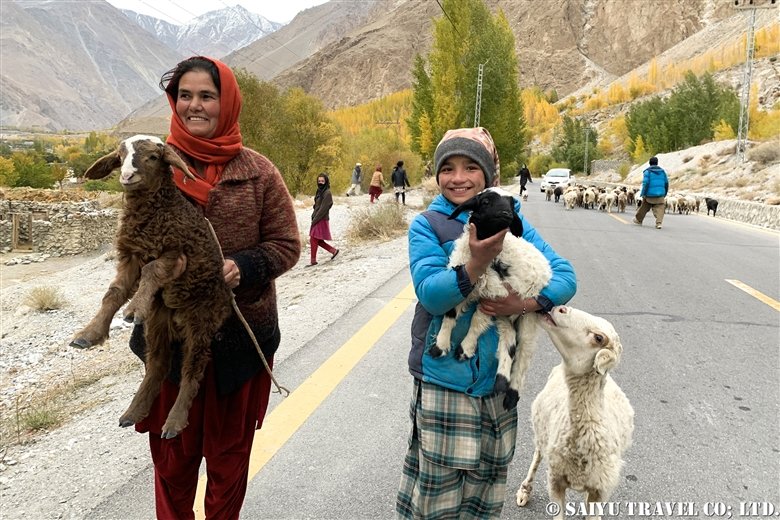
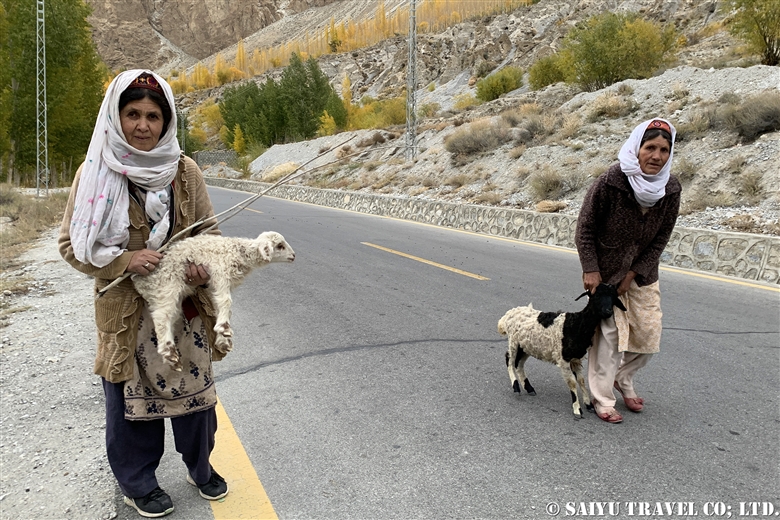
They quickly separate out their own livestock from the group. Some of the villagers carry dried apricots as a treat to get the sheep to follow them back to their homes.


They have to know which one is their own livestock!


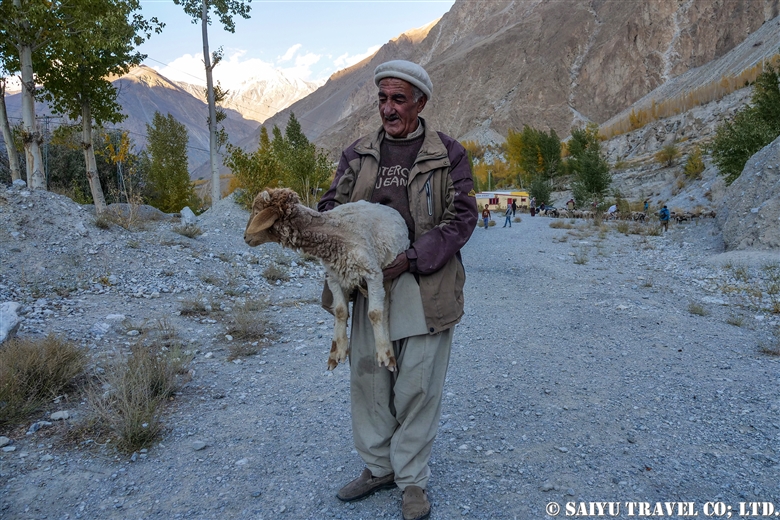
This sheep wandered off from the heard and had to be carried back.


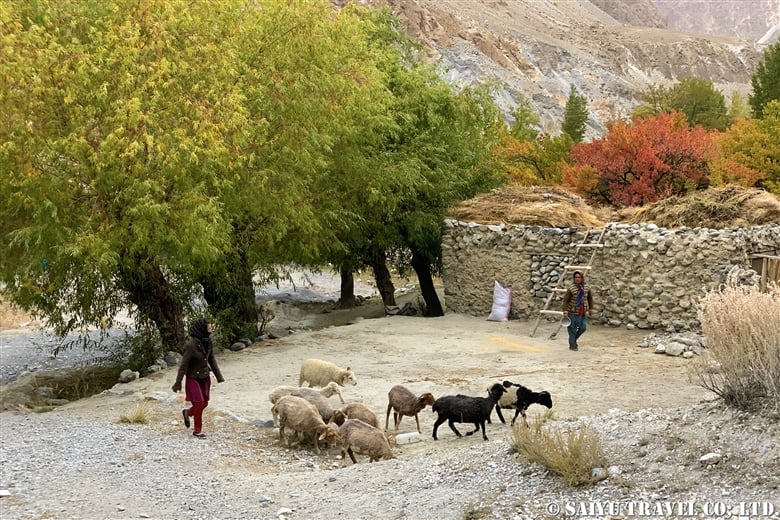
Each owner brings back their own livestock to their respective shed for the evening. It all happened within a 15 minute window. But this little moment is just the daily life part of a wonderful village life in northern Pakistan.


Image : Mariko SAWADA

Visit : Oct 2021, Ghalapan village, Upper Hunza, Gilgit-Baltistan

Category : = Video Clip Gilgit-Baltistan > ◆ Video Breathtaking Views of Pakistan > ◆ Gilgit-Baltistan > - Gojar > - Morkhun > ◇Domestic animal of Pakistan
Tag : , , , , , , , , , , , , , , , , , , , , , ,

(Video) The curious tailed sheep that I met in the Swat Valley

This is a video taken in the Swat Valley of the sheep living there.
While traveling the Valley by car, one after another we saw groups of herders and their sheep. A typical scene in Pakistan.


Sheep in the Swat Valley (Pakistan)  The curious tailed sheep|

The tails are dyed with henna which I found so interesting.
The Pashtun people of Pakistan. It is a fashionable expression unique to them.


Sheep Tail Variations

This video features various sheep’s tails: some long and some short tails.
The Dunba sheep has no tail and its hips make a heart shape. It is a type of sheep that accumulates fat in the buttocks, a Pakistani delicacy. Namak Mandy, a restaurant district in Peshawar, is famous for Dunba cuisine.


And then, finally the sheep after they have been shaved…
Without hair, the sheep look so odd.

These are such curious looking sheep with very unique looks.

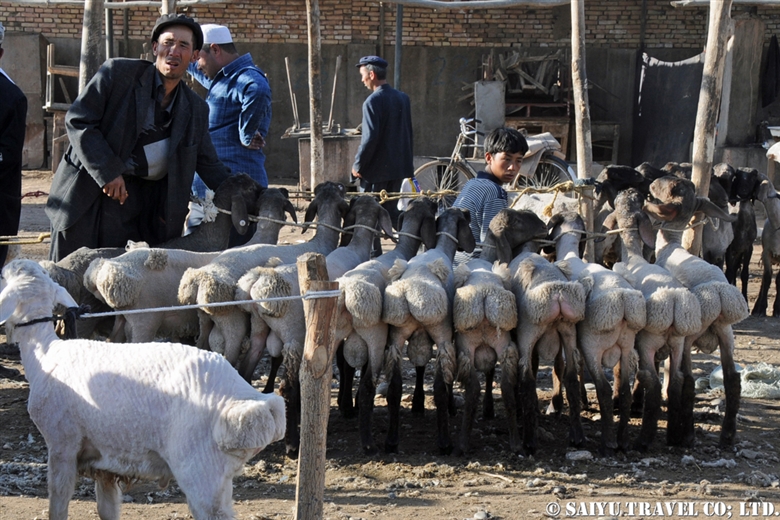
This photo was taken in Kashgar, China, not Pakistan. It’s a neighboring country across the border, but the Uyghur people also seem to like Dumba sheep as well.

The Swat Valley has changed a lot. In the fall of 2019, a new road was extended into the Valley. I hope the sheep continue to march along the road as they did in the past.


Video/photo & Text: Mariko SAWADA
*The photos and videos were taken between 2008 and 2015 in Swat, Khyber Pakhtunkhwa


Category : = Video Clip KPK > ◆ Video Breathtaking Views of Pakistan > ◆Khyber Pakhtunkhwa > - Swat > ◇Domestic animal of Pakistan
Tag : , , , , , , , , , , , ,

TOP