

English / Japanese

Chawmos Festival – Kuta Mru : The Kalash Rituals Still Alive to This Day

It is early December in the Kalash Valley. The harvests have all been completed and the livestock have come down from the mountains. The ceremony to welcome the God Balimain of Kalash has begun. It includes rites of passage, purification, and sacrifice—all culminating in a farewell to Balimain, complete with torches and a large bonfire. The following is a report on a trip that brought me into contact with the rituals of a deep faith that continues to thrive in the modern age.
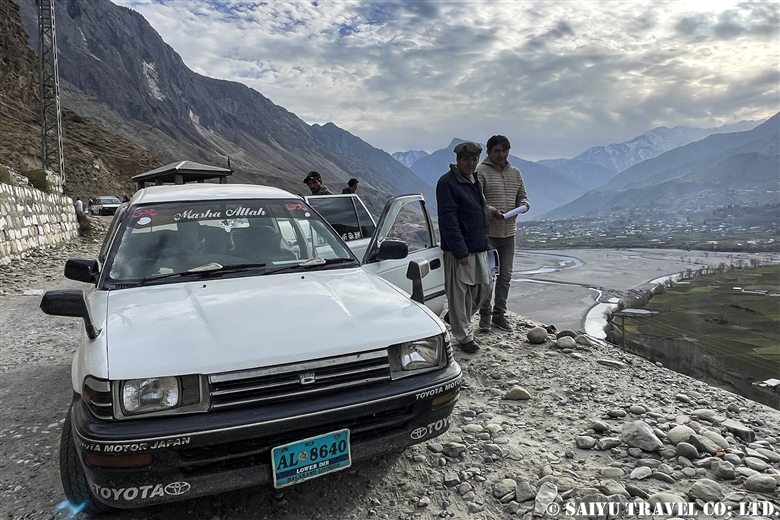
During the sacred period of Chawmos, Muslims are not allowed to enter the valley. Since neither staff nor drivers from Islamabad could enter the valley, Kalash staff came to Ayun to pick me up.
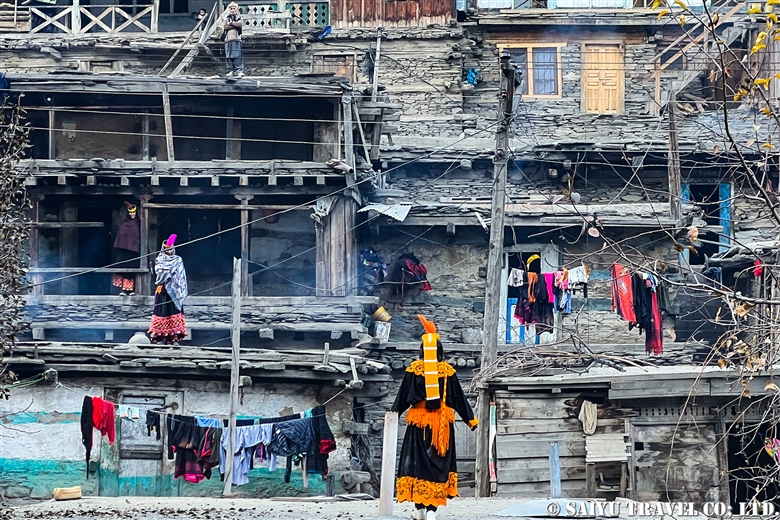
In the village of Kalash, a lot of laundry was hung out to dry to ensure people can wear new clothes during the sacred period. Before the purification ritual, one must take a bath and put on new clothes.

Sharabira displayed in a house

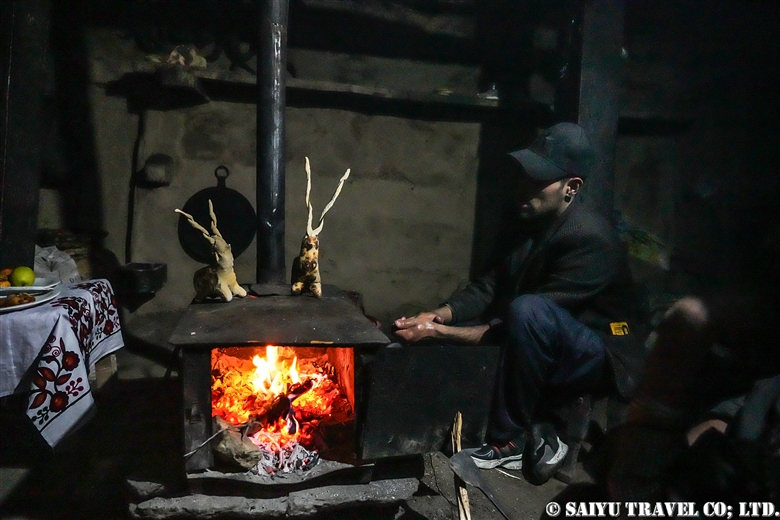
I made it just in time to be able to observe the Sharabirayak ritual in the Bumburet Valley. The word “Shara” means markhor and the word “Bira” means male goat. After the women bake walnut bread with cheese to be distributed the next day, the men knead dough, which they shape in the form of either markhor or male goats. These statues are then baked in a fireplace. This ritual is called Kuta Mru.

Sharabira making takes place at night. When I visited, there was no electricity in the valley, and I was able to glimpse the beautiful sight of a woman baking walnut bread by the light of a stove fire.

Afterward, the purified man kneads purified dough and begins to sculpt animal shapes.

He proceeded to bake them on the stove.

The completed sharabira on display

The ritual of Kuta Mru is performed in each household as well as in the temple of the goddess Jestak. The wheat collected from each family is used to make a Shara (markhor) at the Jestak Han temple. At night, the men gather to make Sharabira and spend the night painting on the walls and drinking until early in the morning. At around 4:00 a.m., they make a “tchich tchich” sound—intended to resemble the call made when chasing goats—urging the Sharabira to go to a place called “Dezelawat.” The people of Kalash believe that the souls of the Sharabira go to Dezelawat, which is located near the Afghan border.
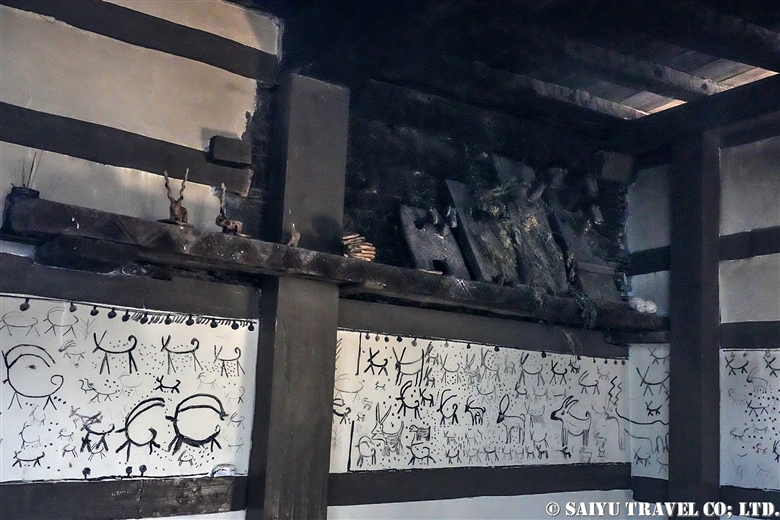
A drawing of Sharabira on the wall of the Jestak Han temple. Three Shara (markhor) are placed by the altar.
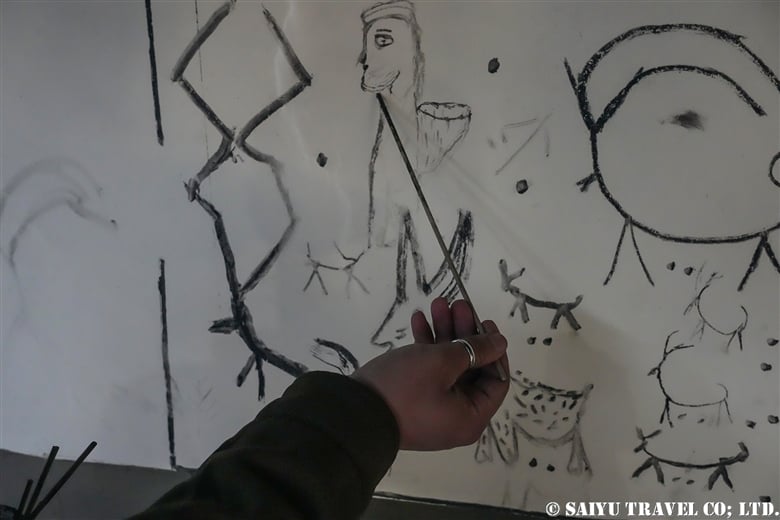
The drawings on the walls of the temple are painted with charcoal made from burning walnut bark prepared by the women.
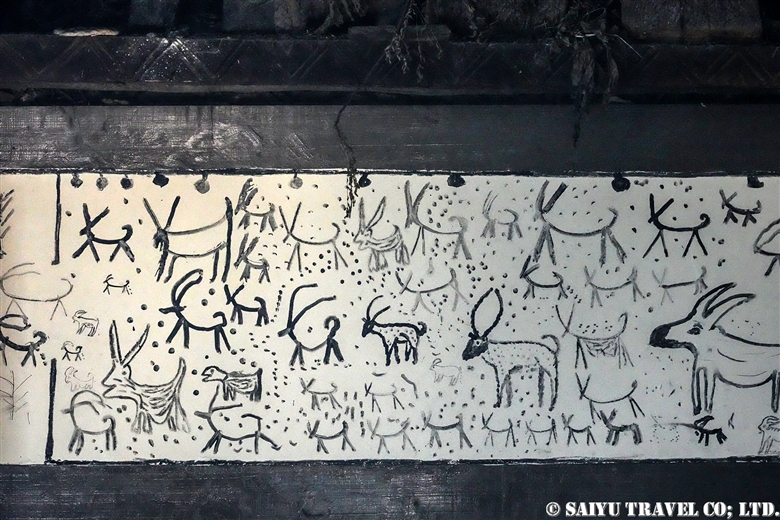
A painting from Kutram in 2024

For those unfamiliar with the markhor, it is the national animal of Pakistan and is known to be extremely valuable for trophy hunting. In the 2024-25 winter hunting season, permission to hunt three Kashmir markhor was given, and each was auctioned off for between $231,000 and $271,000. It is said that 80% of the income from trophy hunting is returned to the local community, and in order to increase the number of trophies, conservation is carried out. Though this initiative has led to the number of markhor increasing, as someone who loves animals, I feel rather conflicted about this.

Kashimir markhor (Toshi Shasha game reserve)

The markhor is a highly sacred animal to the people of Kalash. They can be seen in Chitral Gol National Park and nearby game reserves. Males with large horns are usually found at higher elevations in the mountains, but during the winter breeding season they come down to lower elevations, making it possible to observe them. The variant in this region is a subspecies, and is known as the Kashmir markhor.


Text & Photo: Mariko SAWADA

Visit: Dec 2024, Kalash Valley, Toshi Shasha – Khyber Pakhtunkhwa

*The information presented here is based on interviews with people in the area. Please note that the descriptions and explanations of the rituals may differ depending on the source.


■Chawmos Festival – Kutram: The Kalash Rituals Still Alive to This Day

■Chawmos Festival – Mandaik : The Kalash Rituals Still Alive to This Day

■Chawmos Festival – Shishao Adu: The Kalash Rituals Still Alive to This Day

■Chawmos Festival – Pushao Adu: The Kalash Rituals Still Alive to This Day

■Chawmos Festival – Chanja Rat: The Kalash Rituals Still Alive to This Day

■The Joshi Spring Festival: A Kalash Ritual


*Contact us, Indus Caravan for more information or to make arrangements for visiting Kalash valley.

*Please follow us on YoutubeInstagram & Facebook

Category : - Kalash Valley > ◆Khyber Pakhtunkhwa
Tag : , , , , , , , , , , , , , , , , , , , , , , , ,

Visiting the Rumbur Valley, Home of the Kalash

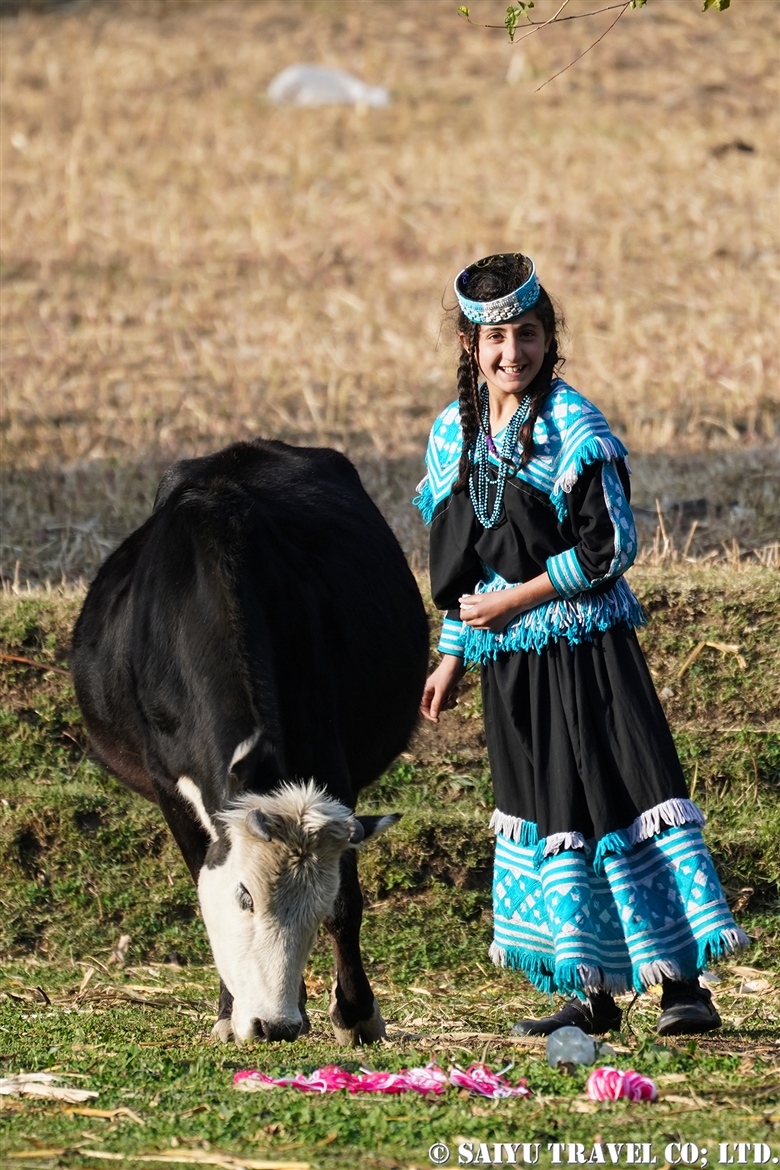
Visiting the Rumbur Valley, where the Kalash live. It has been a long time since my last visit. I was thrilled to meet these beautiful young ladies.

The village scene at dusk. The valley’s steep slopes are used as a base for these lively dwellings.

Here is a Pashtun street merchant who was selling plates on the corner. The young lady is negotiating with the man, but instead of money, she placed some walnuts in the bowl she wanted to buy and handed it to him. They are bartering! The white bag behind him, to the left of the photo, is full of walnuts.

Going further into the village. The ditch full of trash caught my attention.

This lady was sewing on the terrace. She was using a sewing machine powered by her foot pedal. This is one of the beautiful sights of the Kalash Valley.

These young girls were playing a rock-kicking game. It is like an old Japanese children’s game! It really surprised me how similar it is.

The girls didn’t mind at all when the camera was pointed at them, and just continue to play their game. Some of the youngsters said proudly, “Foreigners take photos of us and publish them in books.” I really enjoyed spending time with these fairy-like girls, but the time came, and I needed to leave the valley.

This is the view of Tirich Mir (7,708m/25,288 feet), the highest peak in the Hindu Kush region. The view on the way through Ayun and Kalash Valleys, of this high peak, is one of the bonus scenes of this trip.


Photo & text : Mariko SAWADA

Visit : Nov 2021, Rumbur, Kalash Valley, Khyber-Pakhtunkhwa

*Contact us, Indus Caravan for more information or to make arrangements for visiting Kalash valley.

*Please follow us on YoutubeInstagram & Facebook

Category : - Kalash Valley > ◆Khyber Pakhtunkhwa
Tag : , , , , , , , , , , , , , , , , , , , , ,

Kalash Valley: November in the Bumburet Village

In early November, I visited the Bumburet Valley. If I had a chance to go a little earlier, I could have seen the Corn Harvest season, but instead I was there during the time of everyone preparing for the coming of winter.
In this time of the year, there are very few tourists and the village is pretty quiet.

We traveled through the town of Ayun to get to the Kalash Valley. This is the amazing view along the way. The towering Tirich Mir (7,708m/25,288 feet), the highest peak in the Hindu Kush, appears over the hills of Ayun. The massive form shines in the morning sunlight.

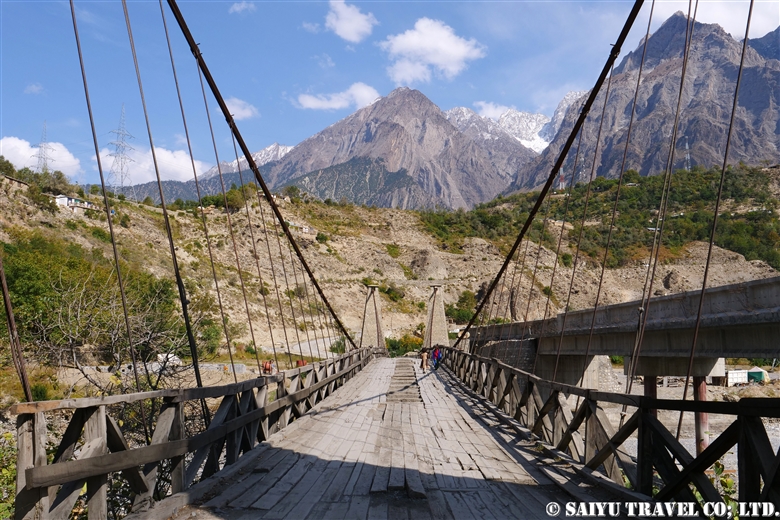
After crossing this suspension bridge, we come to the junction of the Bumburet and Rambur Valleys. We head west here and continue on to Bumburet.

The Kalash homes started to come into view. The wooden houses are built into the slopes, making efficient use of the terrace and roofs.

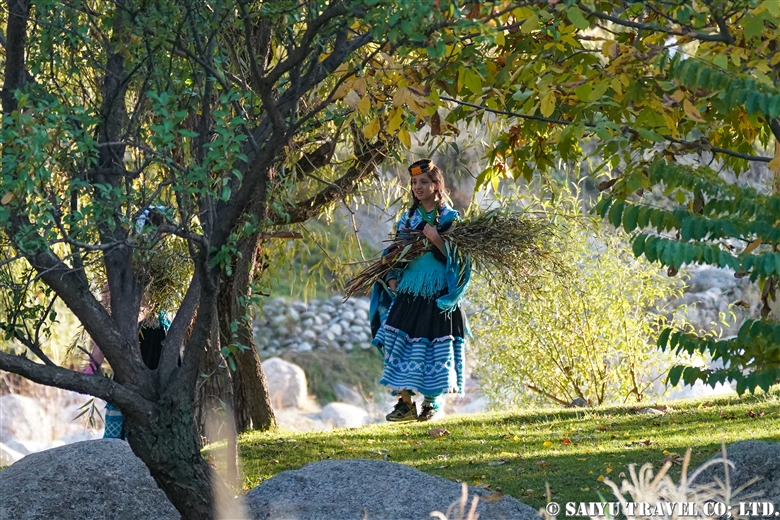
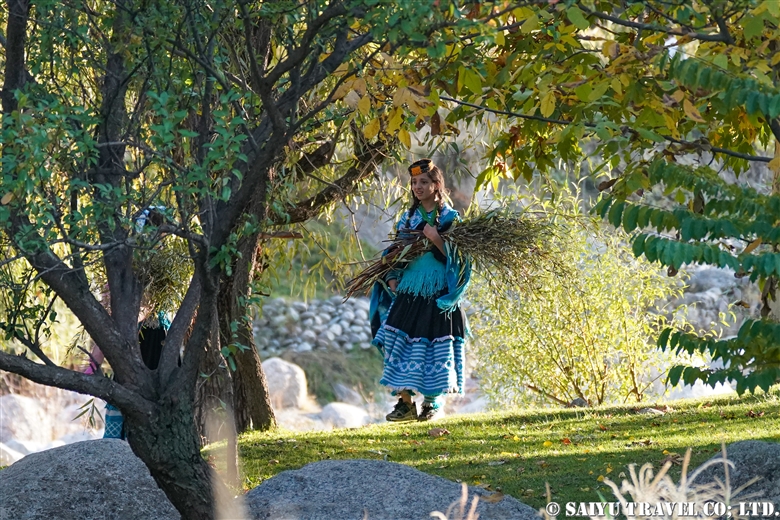
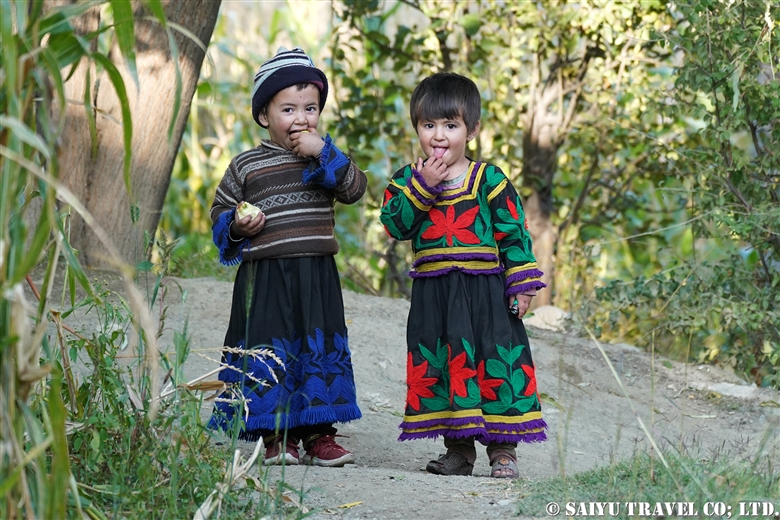
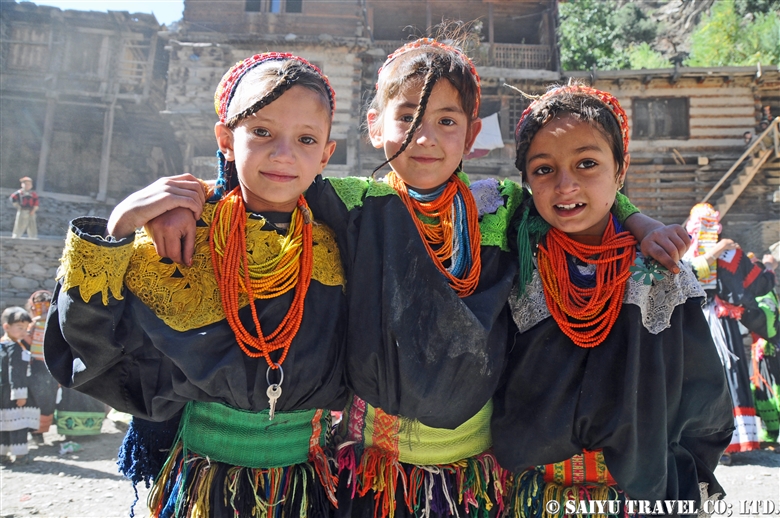
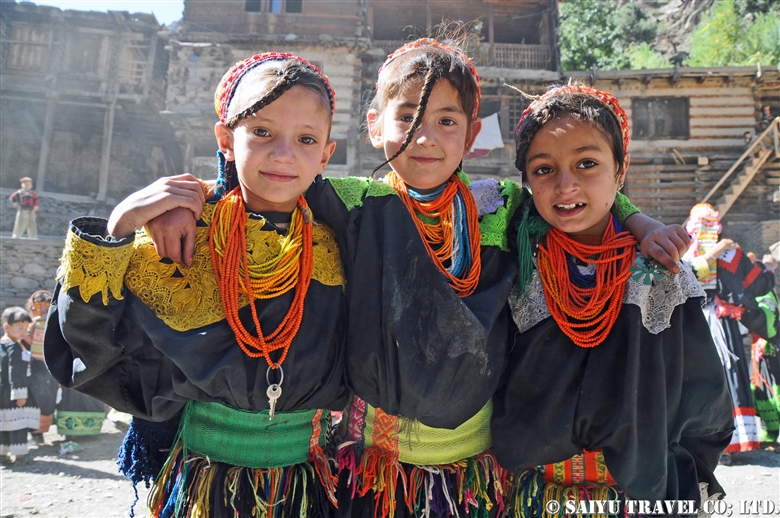
These young girls who were playing with a baby goat caught my attention. She has such a charming, fairy-like beauty.

I went up these stairs, made from a hollowed-out tree, to the shaman lady’s house.

This is the terrace of the shaman’s house. According to her, she has the power to foresee the future and find things people had lost, so the people asked her to become a shaman.

Inside the shaman’s house. With the light only coming in from the doorway, the traditional lifestyle of the Kalash people is simple.

These wooden statues stood in the village funeral parlour.

The handmade wine made by the Kalash people, I found it so good.

This woman is threshing crops on her roof. This is a scene that is unique to the harvest season.

It filled me with so much happiness to revisit a school teacher home in Anish village, I found daughter has now become a mother! I used to visit them often, so this is the best memory.

The last time I could visit Bumburet Village was 2 years ago. The Muslim population is increasing and the number of Kalash girls wearing hijabs was higher than before. The color of the handmade embroidery on the traditional folk clothing was quite popular and flashy.

Over the past 30 years, as a tour guide for Saiyu Travel, I have seen the decline of the traditional ethnic lifestyles and clothing in various parts of the world. For the people, the more things become more modernized, their life also becomes easier, so it means these traditional ways are lost voluntarily. But still, it makes me sad to see the sudden shift away from ancient traditions and beliefs. I send strong prayers that these precious ethnic minorities like the Kalash can hold on their culture and rich traditions as part of the Islamic Republic of Pakistan.


Photos & text: Mariko SAWADA
Visit: Nov 2021, Bumburet, Kalash Valley, Khyber-Pakhtunkhwa

Category : - Kalash Valley > ◆Khyber Pakhtunkhwa
Tag : , , , , , , , , , , , , , , , , , , , , , ,

Kalash Valley’s Bumburet and Rumbur

This is a video that highlights the scenery of the Kalash Valley when we visited in October. In the past when we visited Bumburet village, it was during the tourist season and quite crowded with domestic tourists.

However, by the middle of October, there were very few visitors at this time of year and the village was quiet.


KALASH VALLEY Bumburet & Rumbur|カラーシャの谷(ボンボレット&ランブール)


Image : Mariko SAWADA

Visit : Oct 2021, Bomboret & Rambur, Kalash valley, Khyber Pakhtunkhwa

Category : = Video Clip KPK > ◆ Video Breathtaking Views of Pakistan > - Kalash Valley > ◆Khyber Pakhtunkhwa
Tag : , , , , , , , , , , , , , , , , , , , , , ,

Autumn in the Kalash Valley

After not having been able to visit in a few years, I was able to return to the valley of the Kalash people, to a village called Bumburet. Mid-October proved to be a truly beautiful time to visit with the fall colors and corn harvest taking place.

On October 16, 2019, the Royal Couple Prince William and his wife visited Kalasha Valley where they enjoyed seeing traditional dances. The social media and news was flooded with “The Royal Couple” and “Kalasha” where trending amongst the Pakistani people.

> Kalash Valley “Where did the Kalash people come from?”

>Religion of Kalash Valley


Taking a turn off the main road, and crossing the bridge brings you into Ayrun village. It is like traveling back in time. You will see as you enter into the village, narrow fields and the beautiful traditional Pakistan. You will eventually come to the intersection of Bumburet and Rumbur Villages.


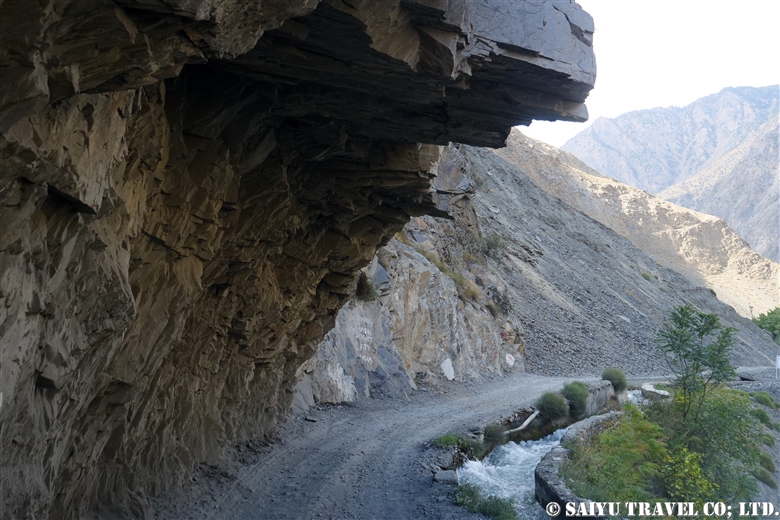
The road into Bumburet village hasn’t changed. It is still the small dirt road that has pull-offs to allow two small cars to pass each other.
However, as we entered into the village, I was a little shocked at the changes I saw. The women we saw were dressed in the traditional Karasha clothing but about half of them were also wearing the shalwar kameez (national dress of Pakistan). And the number of guesthouses was a bit overwhelming.

Where did the traditional style houses go? In recent years, an increase in domestic tours and a shortage of lodges for the tourists to stay, naturally meant that the number of guesthouses increased suddenly. Most of the managers of these guesthouses are from the outside. I hoped they would build them in the traditional style to match the landscape and keep the flavor of the original village.


Walking on a path between the corn fields, I went to visit an acquaintance. The Kalasha children I met on the way.


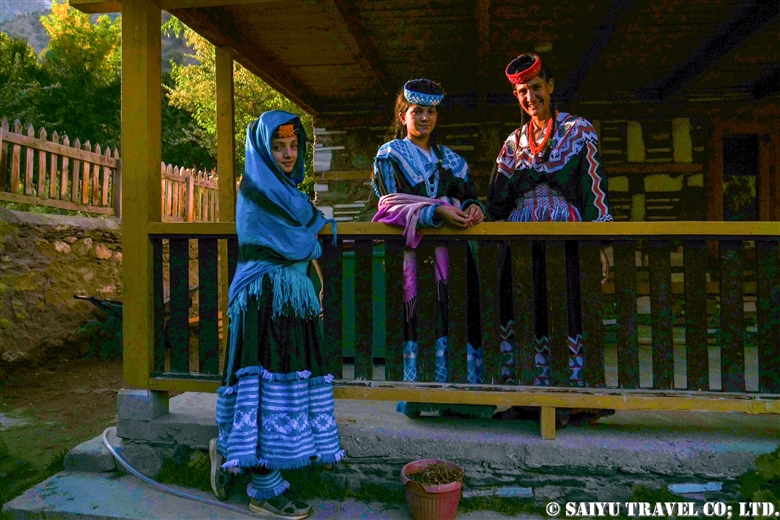
This is the School  dress of the Kalasha young ladies. There seems to be more girls wearing scarves then before.


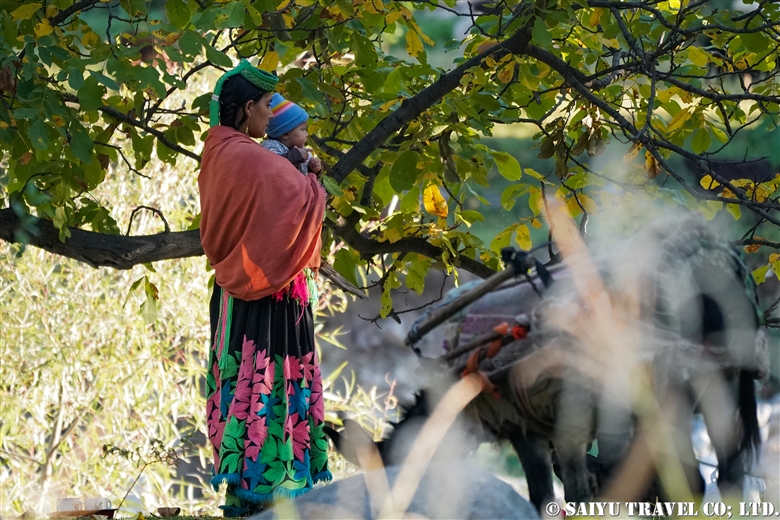
Just off the main road through the village I could see this beautiful figure taking a walk.


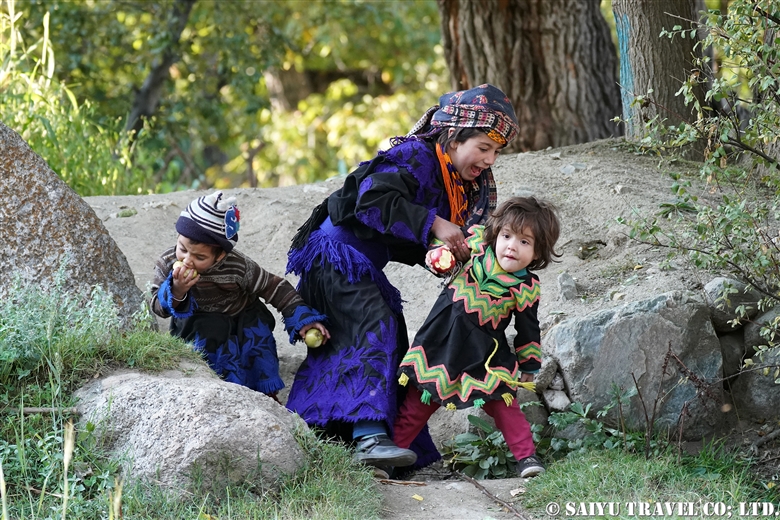
Children playing next to a cornfield where their parents are busy harvesting.


No on can stop change that comes with progress, but I hope that these beautiful sights can continue into the future.


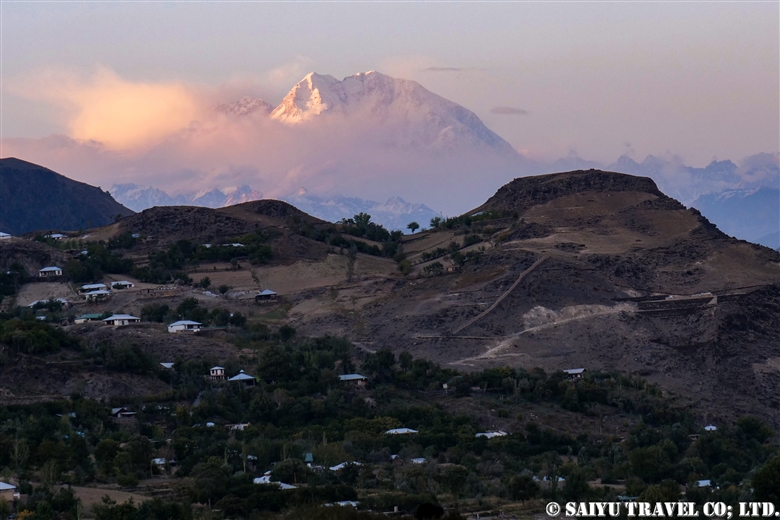
On the way out from the Kalasha Valley, we could see the village of Ayun sitting at the base of Tirich Mir. The highest peak of Hindu Kush is Tirich Mir (or Terichmir stands at 7,708 meters) was bathed in the hues of the setting sun.


Photo & Text : Mariko SAWADA
Visit : Oct 2019, Bomboret Village, Kalash Valley, Khyber Pakhtunkhwa

Category : - Kalash Valley > ◆Khyber Pakhtunkhwa
Tag : , , , , , , , , , , , , , , , , , , , , , , , ,

Religion of Kalash Valley

The Kalash’s religion is considered to be closer to Vedic and Pre-Zoroastrian cultures, even though it has a valuable existence that retains the old form of the Indo-Aryan religion. There is a God of Creator “Dezau” and many gods. There are gods closely related to life and nature, such as “Balumain”, “Sajigor” and “Mahan Deva” which appear at the Chaumos Festival and the goddess “Jestak” who protects the house. The place of prayer is called Dewa, and in each village has small altar at temple of Jestak han and the outskirts of the village.


Temple of Jestak han

Jestak is a goddess who controls the family, housework, marriage and each clan has a temple, not every village.There is a sheep motif at the entrance, Laternendeke ceiling which is typical in Pamir architecture decorations. There is a wood carving on the back of the temple that shows “Balumain” and there is mural painting from the Chaumos Festival.


There are two clans living in Karakal village in Bomboret Valley, and Jastak han has two entrances for each clan in one building.
The picture is Jastak han of Anish village. Designs and decorations inspired by goats and sheep. Laternendeke ceilings of typical architectural styles specific to mountains of Pakistan, Tajikistan and the Wakhan Corridor area.


The Gandao – Wooden statue

A wooden image created to admire the memories of dead person, contributions, and achievements. The production and rituals of this Gandao are very expensive and require a lot of goats, cheese and ghee. Thus, it can only be created by the rich men who are influential. In Bomboret Valley, two sons made two Gandao for their father and uncle, who died more than 10 years ago in Brun village in 2008. (It can still be seen in the Brun village cemetery).
The Gandao is at the center of the ceremonial place. People dance around it and after the ritual is completed, the Gandao is transported to the graveyard.


Cemetery Mandawjaw

The original burial of Kalash was to only put body in a wooden coffin and place in a cemetery. But about 50 years ago, they started practicing burial like Muslims. At present, things that seem to be whitening are old things about 50 years ago. In the past, it was said that if not covering the coffin, it was easy for the soul to free and naturally weatherable.


“Pure” and “Impure” concept

The Kalasha has the strong concept for “Pure” and “Impure” in their life. Therefore, there are many rituals to purify the things that they believe are impure.
The representative one is Bashari. It is a hut where women during menstruation gather and live together. Delivery is also carried out here, and after the delivery it is possible to return to the house where the husband is eagerly waiting after the purification ceremony. There is one in each village, and women in Bashari who are under menstruation should not touch others. For example, to pass the things to other person, She can throw it but cannot hand it over.

In short, it’s not easy to understand just by talking. You must visit here and see it for yourself !

Photo & Text  : Mariko SAWADA
※  The photo was taken during the visit between 2006 and 2014.

Category : - Kalash Valley > ◆Khyber Pakhtunkhwa
Tag : , , , , , , , , , , , , , , , , , , ,

TOP